
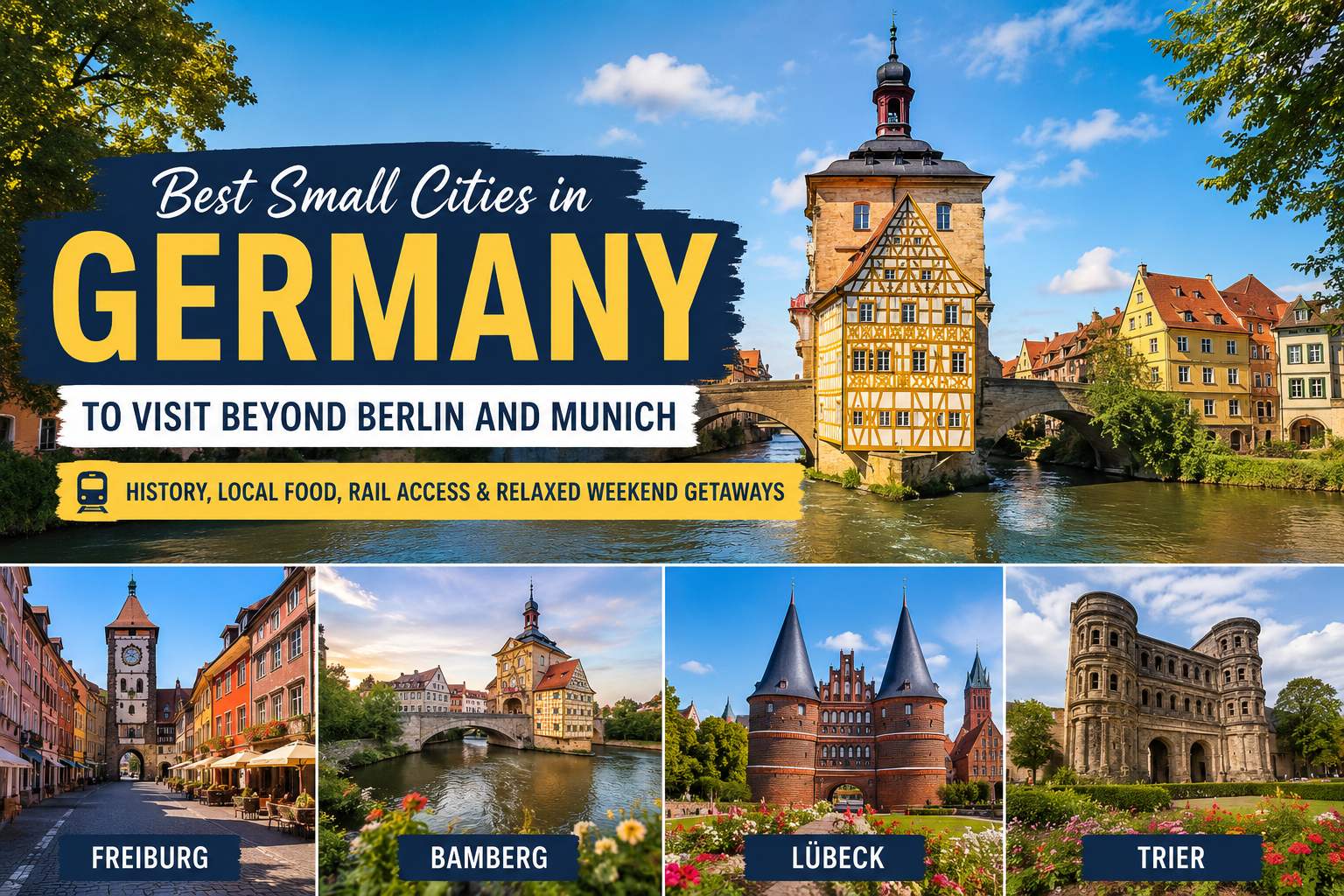
If you’ve already explored Berlin and Munich—or simply want a quieter side of Germany—its smaller cities make excellent weekend destinations. These places combine history, local cuisine, walkable streets, and excellent rail connections, allowing you to experience authentic German culture without the crowds of the country’s largest tourist centers.
Whether you’re interested in medieval architecture, riverside scenery, or regional food, these destinations offer a slower and more rewarding travel experience.
Why Visit Germany’s Smaller Cities?
Germany is made up of diverse regions, each with its own traditions, architecture, and culinary specialties. Smaller cities often preserve these local identities better than major metropolitan areas.
A short visit can include historic market squares, charming old towns, independent cafés, museums, scenic parks, and beautiful walking routes—all within easy reach. Since most attractions are located close together, you can spend less time commuting and more time enjoying the destination.
Easy Travel by Train
One of the biggest advantages of exploring Germany is its extensive rail network. Many smaller cities are well connected by regional and intercity trains, making it simple to plan a two- or three-day getaway without renting a car.
Arriving by train also places you close to city centers, allowing you to begin sightseeing almost immediately.
Freiburg: Historic Streets and Black Forest Adventures
Located on the edge of the Black Forest, Freiburg is one of Germany’s sunniest cities. Its colorful old town, lively cathedral square, and small canals create a welcoming atmosphere for visitors.
The city’s efficient tram system makes getting around effortless, while nearby forest trails provide excellent opportunities for hiking and outdoor activities. Freiburg is ideal for travelers looking to combine urban charm with nature.
Bamberg: Medieval Beauty Along the River
Bamberg is famous for its remarkably preserved historic center, a UNESCO World Heritage Site. Visitors can spend hours strolling across picturesque bridges, admiring traditional buildings, and relaxing beside the river.
The city is also well known for its local breweries and unique smoked beer, making it an excellent destination for food and beer enthusiasts as well as history lovers.
Lübeck: A Taste of Northern Germany
Lübeck showcases the distinctive character of northern Germany through its impressive Brick Gothic architecture and rich maritime heritage. Walking through its narrow streets reveals centuries of history, while local bakeries and confectioneries tempt visitors with the city’s famous marzipan.
Its location also makes Lübeck a convenient base for day trips to nearby Baltic Sea beaches and coastal towns.
Trier: Discover Germany’s Roman Heritage
As Germany’s oldest city, Trier offers an extraordinary journey into the past. Visitors can explore well-preserved Roman monuments, including the iconic Porta Nigra, ancient baths, and historic amphitheaters.
Situated in the scenic Moselle Valley, Trier is also an excellent destination for wine lovers who want to sample regional vineyards and enjoy riverside landscapes.
Helpful Tips for Planning Your Trip
To make the most of your visit:
- Stay in accommodation near the old town or main railway station for convenient sightseeing.
- Check opening hours in advance, as many businesses operate on reduced schedules or close on Sundays.
- Set aside time to enjoy regional specialties at locally owned restaurants and cafés.
- Leave room in your itinerary for spontaneous discoveries—some of the best experiences come from wandering without a strict schedule.
Frequently Asked Questions
Are Germany’s smaller cities easy to explore without a car?
Yes. Most are well connected by train, and their compact layouts make them easy to explore on foot. Public transportation is also reliable if you need to travel farther.
How long should I stay?
A two-night stay is usually enough to experience one city comfortably. If you’d like to include nearby attractions or a countryside excursion, consider staying for three nights.
Final Thoughts
Germany’s smaller cities provide an authentic alternative to the country’s busiest tourist destinations. From Freiburg’s gateway to the Black Forest and Bamberg’s medieval streets to Lübeck’s maritime heritage and Trier’s Roman landmarks, each destination offers its own unique personality.
Thanks to Germany’s excellent rail network, compact city centers, and rich regional traditions, these lesser-known destinations are perfect for travelers seeking a relaxed, memorable weekend escape.