
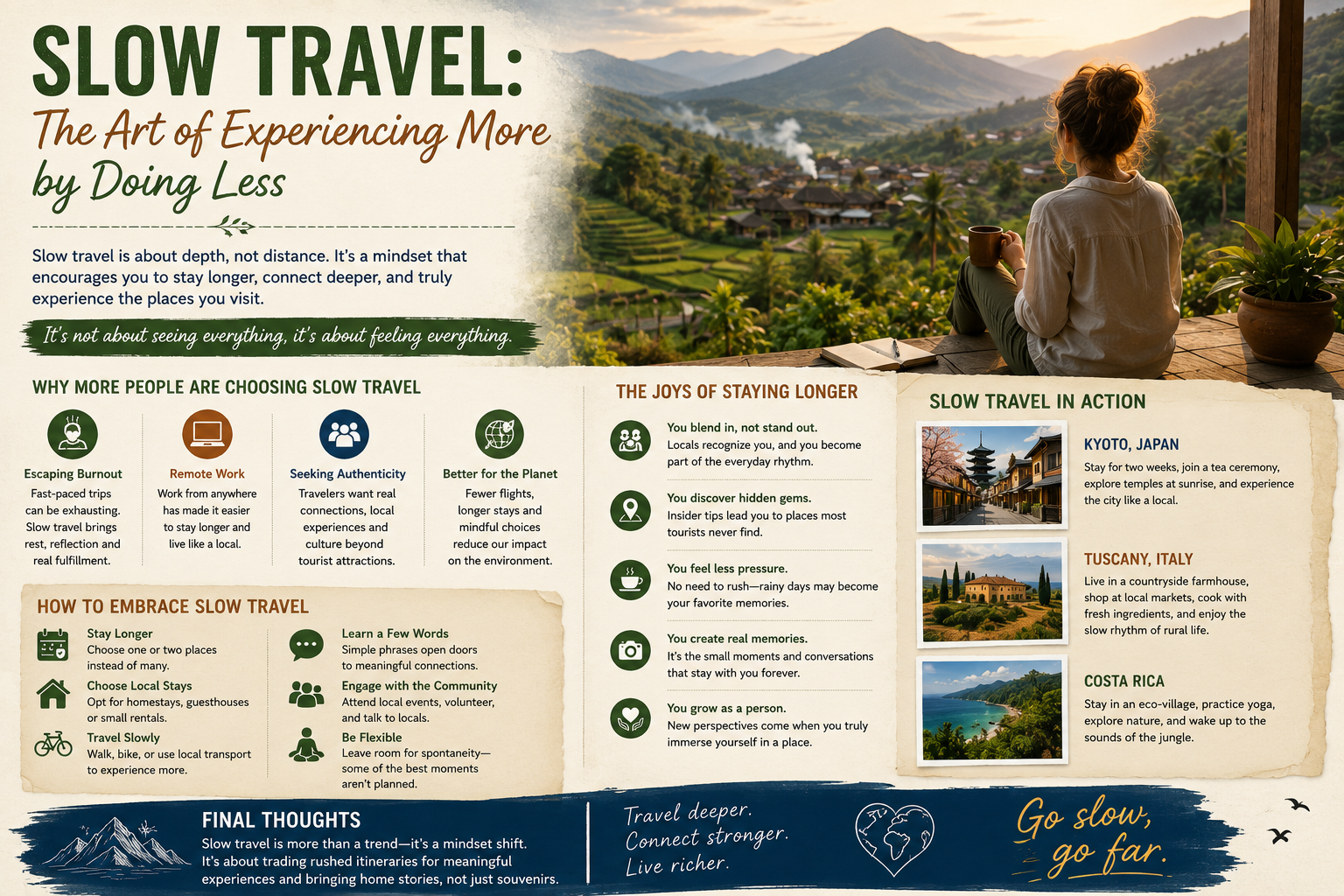
Modern travel often feels like a race against time. Many travelers try to squeeze multiple cities, famous attractions, and endless activities into a single vacation. While this approach can be exciting, it often leaves people feeling exhausted instead of refreshed.
That’s why more travelers are embracing a different philosophy known as slow travel.
Rather than rushing from one destination to another, slow travel encourages spending more time in fewer places. It focuses on meaningful experiences, local culture, genuine connections, and enjoying each destination at a comfortable pace.
Whether you’re planning a weekend getaway or an extended international journey, slow travel can completely transform the way you experience the world.
What Is Slow Travel?
Slow travel is a travel philosophy that prioritizes quality over quantity. Instead of trying to visit as many destinations as possible, travelers choose to stay longer in one location and experience everyday life like a local.
The idea is simple: travel isn’t about collecting passport stamps—it’s about creating lasting memories.
A slow traveler may rent a small apartment in a historic city, shop at neighborhood markets, enjoy local cafés, use public transportation, and spend time discovering hidden corners that most tourists never see.
The goal isn’t to check attractions off a list but to build a genuine connection with the destination.
Why More Travelers Are Choosing Slow Travel
Travel habits have changed significantly in recent years. Many people now value meaningful experiences more than busy itineraries.
Instead of returning home tired after trying to “see everything,” travelers increasingly want vacations that help them relax, learn, and reconnect with themselves.
Several factors have contributed to the rise of slow travel.
Escaping Travel Burnout
Traditional sightseeing vacations often involve early mornings, crowded attractions, and constant transportation between destinations.
While these trips can be exciting, they can also become physically and mentally exhausting.
Slow travel replaces packed schedules with flexibility, allowing travelers to enjoy each day without feeling pressured to fit everything into a limited amount of time.
A Desire for Authentic Experiences
Today’s travelers are increasingly interested in experiencing destinations beyond the typical tourist attractions.
Instead of only visiting famous landmarks, many prefer to:
- Explore residential neighborhoods
- Visit local farmers’ markets
- Try regional dishes
- Attend community festivals
- Learn about local traditions
- Meet residents and small business owners
These authentic experiences often become the most memorable parts of any journey.
Remote Work Has Created More Flexibility
The growth of remote work has made long-term travel more accessible than ever.
Many professionals can now work while staying in another city or country for several weeks or months.
Longer stays allow travelers to experience destinations more deeply while maintaining their professional responsibilities.
Sustainable Travel Matters
Slow travel also supports more environmentally responsible tourism.
Spending longer in one destination reduces frequent transportation, especially domestic flights, and encourages lower-impact activities such as walking, cycling, and using public transportation.
Supporting local accommodations, cafés, and family-owned businesses also helps strengthen local economies.
The Benefits of Staying Longer
One of the greatest advantages of slow travel is the opportunity to truly understand a destination.
Rather than rushing through attractions, travelers begin to experience daily life.
Build Meaningful Connections
After spending several days in one place, familiar faces become part of your routine.
The café owner remembers your favorite drink, shopkeepers greet you with a smile, and conversations become more natural.
These simple interactions create memories that often last much longer than visiting another famous landmark.
Discover Hidden Gems
Many of the best travel experiences aren’t listed in guidebooks.
Local residents often recommend quiet viewpoints, neighborhood bakeries, scenic walking trails, and family-owned restaurants that most visitors never discover.
These hidden places frequently become the highlights of a trip.
Reduce Travel Stress
Constantly changing hotels, catching trains, or rushing to airports can quickly become exhausting.
Slow travel removes much of this pressure.
If it rains, you can simply adjust your plans. If you find a beautiful neighborhood, you have time to explore it without worrying about missing your next destination.
Create More Memorable Experiences
Instead of remembering only famous monuments, you’ll remember conversations with local people, peaceful mornings at neighborhood cafés, colorful street markets, and unexpected discoveries.
These personal moments often become the stories travelers cherish the most.
Destinations That Are Perfect for Slow Travel
Almost any destination can be enjoyed through slow travel, but some places naturally encourage a relaxed pace.
Kyoto, Japan
Spend your mornings exploring quiet temples, stroll through traditional neighborhoods, attend a tea ceremony, and enjoy peaceful gardens away from the busiest tourist hours.
Tuscany, Italy
Stay in a countryside farmhouse, visit local markets, enjoy regional cuisine, cycle through vineyards, and experience the slower rhythm of rural Italian life.
Costa Rica
Choose an eco-lodge surrounded by rainforest, observe wildlife, practice yoga, hike through national parks, and embrace the country’s relaxed “Pura Vida” lifestyle.
Small Coastal Towns
Quiet seaside villages often offer scenic walks, fresh seafood, independent cafés, and beautiful sunsets without the crowds found in larger beach resorts.
How to Practice Slow Travel
You don’t need to travel for months to enjoy the benefits of slow travel.
Here are some simple ways to get started.
Stay Longer in Fewer Places
Instead of visiting four or five destinations during one vacation, focus on one or two locations and spend more time exploring each one.
Choose Local Accommodation
Family-run guesthouses, boutique hotels, homestays, and vacation rentals often provide a more authentic experience than large international hotel chains.
Walk or Cycle Whenever Possible
Exploring on foot or by bicycle allows you to notice architecture, local shops, parks, and neighborhoods that are easy to miss when traveling by car or tour bus.
Learn Basic Local Phrases
Even a few words in the local language can create warmer interactions and demonstrate respect for the local culture.
Support Local Businesses
Eat at neighborhood restaurants, buy handmade products from local artisans, and shop at community markets whenever possible.
These choices help support the local economy while making your experience more authentic.
Leave Time for Spontaneity
Avoid scheduling every hour of your trip.
Some of the best travel memories happen unexpectedly—whether it’s discovering a hidden café, joining a local celebration, or finding a scenic viewpoint while taking an unplanned walk.
Common Misconceptions About Slow Travel
It’s only for long vacations.
Not true. Even a weekend trip can follow slow travel principles by focusing on one destination instead of trying to visit several.
It’s boring.
Slow travel isn’t about doing less—it’s about experiencing more deeply. Activities such as cooking classes, hiking, cycling, local festivals, and cultural workshops often become far more rewarding than rushing between attractions.
It’s expensive.
In many cases, slow travel can actually reduce costs. Longer stays often come with accommodation discounts, while cooking some meals and using public transportation helps lower daily expenses.
Frequently Asked Questions
What is slow travel?
Slow travel is a travel style that encourages spending more time in fewer destinations, allowing travelers to experience local culture, everyday life, and meaningful connections.
Is slow travel suitable for families?
Yes. Families often enjoy a slower pace because it reduces travel fatigue and allows children to become comfortable in one location.
Can I practice slow travel on a short trip?
Absolutely. Even a two- or three-day getaway can follow slow travel principles by avoiding an overloaded itinerary and focusing on quality experiences.
Does slow travel help the environment?
Yes. Longer stays reduce transportation emissions, encourage walking and public transit, and support sustainable tourism practices.
Who benefits most from slow travel?
Slow travel is suitable for solo travelers, couples, families, retirees, digital nomads, and anyone who prefers meaningful experiences over rushed sightseeing.
Final Thoughts
Slow travel is more than a vacation style—it’s a different way of experiencing the world. Instead of measuring a trip by the number of places visited, it encourages travelers to appreciate meaningful experiences, local culture, and genuine human connections.
By spending more time in fewer destinations, supporting local communities, and embracing flexibility, every journey becomes richer and more memorable.
Whether you’re exploring a historic European town, relaxing in a coastal village, or staying in a mountain retreat, slowing down allows you to notice the details that many travelers miss.
The next time you plan a trip, resist the urge to pack every day with activities. Give yourself the freedom to wander, connect, and enjoy each destination at your own pace.
Sometimes, the most unforgettable travel experiences happen when you simply slow down.