
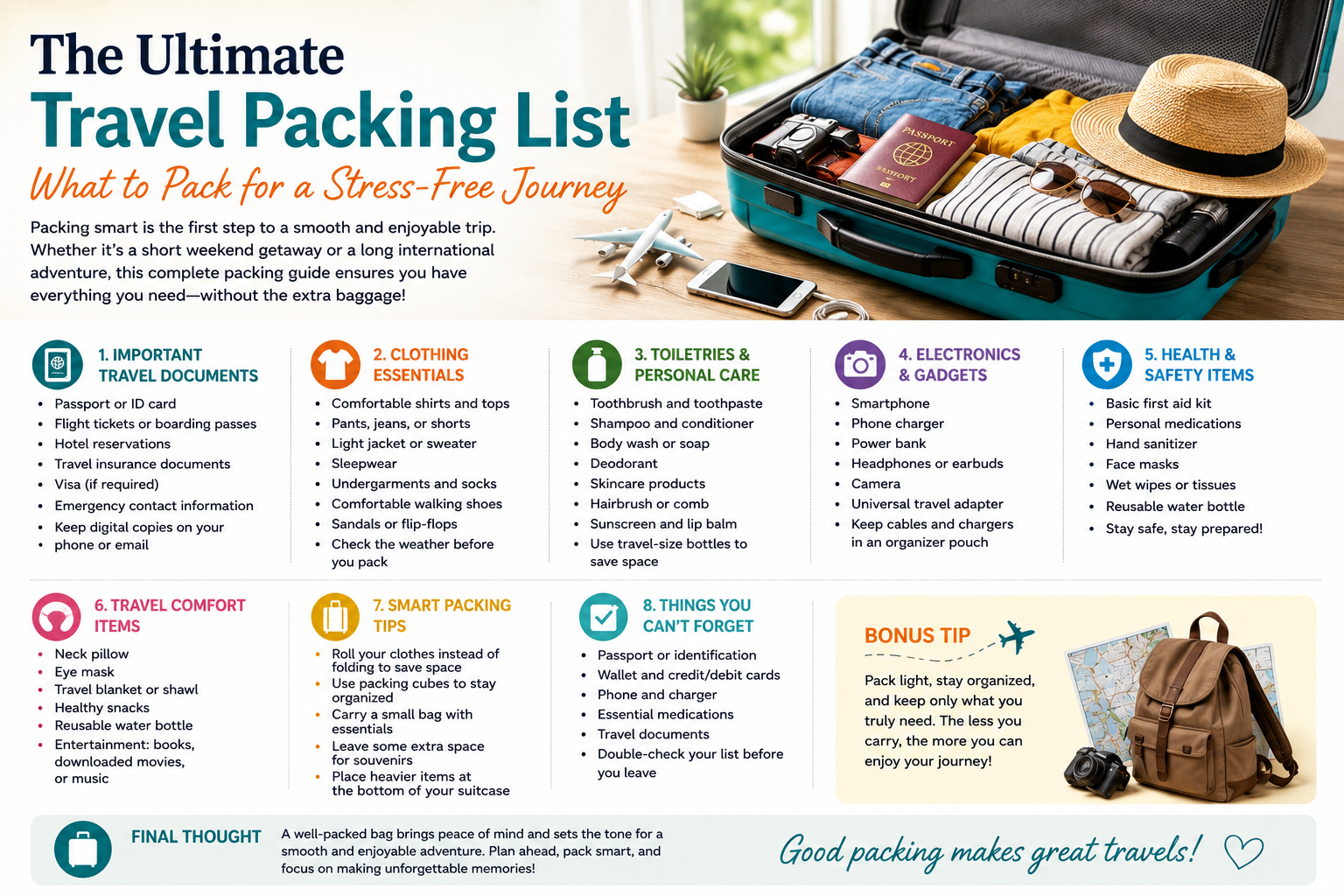
Packing is one of the most important steps in preparing for any trip. Whether you’re heading out for a weekend getaway, a family vacation, a business trip, or an international adventure, packing efficiently can make your journey far more enjoyable.
A well-organized packing list ensures you have everything you need without carrying unnecessary luggage. Instead of worrying about forgotten essentials or overstuffed suitcases, you can focus on enjoying your destination.
This complete travel packing guide covers everything you should pack before leaving home, along with practical tips to help you travel smarter.
Why a Travel Packing List Matters
Many travelers either overpack or forget important items. Both situations can lead to unnecessary stress and extra expenses during the trip.
Creating a packing checklist helps you:
- Stay organized
- Avoid forgetting important belongings
- Pack only what you truly need
- Save luggage space
- Reduce baggage fees
- Make unpacking easier at your destination
Preparing your luggage a day or two before departure also gives you enough time to buy anything you may have forgotten.
Essential Travel Documents
Your travel documents should always be packed first because they’re the most important items you’ll carry.
Before leaving home, make sure you have:
- Passport or government-issued ID
- Flight tickets or boarding passes
- Hotel booking confirmations
- Travel insurance documents
- Visa or travel authorization (if required)
- Driver’s license (if renting a vehicle)
- Emergency contact information
- Copies of important documents
Store digital copies in secure cloud storage or email them to yourself so you can access them if the originals are lost.
Keep all important documents together in a waterproof travel organizer for easy access.
Clothing Essentials
Choosing the right clothing depends on your destination, the weather, and the length of your trip.
Instead of packing an outfit for every day, bring versatile clothing that can be mixed and matched.
Your clothing checklist should include:
- Comfortable T-shirts or tops
- Jeans or lightweight trousers
- Shorts or skirts (depending on the season)
- Lightweight sweater or hoodie
- Waterproof jacket
- Sleepwear
- Undergarments
- Socks
- Comfortable walking shoes
- Sandals or flip-flops
- Hat or cap
- Sunglasses
Always check the local weather forecast before you pack to avoid bringing unnecessary clothing.
Toiletries and Personal Care
Although many hotels provide basic toiletries, carrying your preferred personal care products is always a good idea.
Travel-size bottles save space while complying with airline carry-on regulations.
Recommended toiletries include:
- Toothbrush and toothpaste
- Shampoo and conditioner
- Body wash or soap
- Deodorant
- Moisturizer
- Sunscreen
- Lip balm
- Hairbrush or comb
- Razor
- Makeup (if required)
- Contact lenses and solution
- Personal hygiene products
Packing toiletries in a leak-proof pouch prevents accidental spills inside your suitcase.
Electronics and Travel Gadgets
Modern travel relies heavily on technology for navigation, communication, entertainment, and photography.
Essential electronics include:
- Smartphone
- Phone charger
- Power bank
- Universal travel adapter
- Charging cables
- Laptop or tablet (if needed)
- Headphones or earbuds
- Camera
- Smartwatch
- Memory cards
Keeping cables inside a dedicated organizer prevents tangles and makes them easy to find.
Health and Safety Essentials
Even healthy travelers should carry a few medical supplies in case of unexpected situations.
Your travel health kit should include:
- Prescription medications
- Basic first-aid kit
- Pain relievers
- Motion sickness tablets
- Adhesive bandages
- Hand sanitizer
- Wet wipes
- Face masks (if preferred)
- Insect repellent
- Reusable water bottle
If you’re traveling internationally, check whether your destination requires any specific vaccinations before departure.
Travel Comfort Items
Long flights, road trips, and train journeys become much more enjoyable with a few comfort essentials.
Consider bringing:
- Neck pillow
- Eye mask
- Earplugs
- Lightweight travel blanket
- Healthy snacks
- Empty reusable water bottle
- Downloaded movies or TV shows
- E-books or magazines
- Notebook and pen
Small comfort items can make a significant difference during long travel days.
Smart Packing Tips
Packing efficiently isn’t only about what you bring—it’s also about how you organize everything.
Follow these practical packing tips:
Roll Your Clothes
Rolling clothes instead of folding them saves space and reduces wrinkles.
Use Packing Cubes
Packing cubes keep clothing organized and make it much easier to find what you need without unpacking your entire suitcase.
Pack Heavy Items at the Bottom
Place heavier items near the wheels of your suitcase to improve balance and make luggage easier to handle.
Leave Extra Space
Avoid filling your suitcase completely. Leaving some room allows you to bring home souvenirs or new purchases without needing another bag.
Keep Essentials in Your Carry-On
Always carry important items such as medications, travel documents, electronics, chargers, and one change of clothes in your cabin bag.
If your checked luggage is delayed, you’ll still have everything you need.
Things You Should Never Forget
Some belongings are simply too important to leave behind.
Before leaving home, double-check that you have:
- Passport or ID
- Wallet
- Credit and debit cards
- Phone
- Charger
- Prescription medication
- Travel insurance
- Boarding pass
- House keys
- Hotel reservation details
Creating a final departure checklist can help ensure nothing important gets forgotten.
Frequently Asked Questions
What should I pack for a one-week vacation?
For a typical seven-day trip, pack enough clothing for about five days and plan to re-wear some items if appropriate. Include essential toiletries, travel documents, electronics, medications, and comfortable footwear.
How can I avoid overpacking?
Choose versatile clothing that can be mixed and matched, limit yourself to one or two pairs of shoes, and follow a packing checklist instead of packing “just in case” items.
What should always go in a carry-on bag?
Carry your passport, travel documents, wallet, medications, chargers, electronics, valuables, and one change of clothes in your cabin luggage.
Should I roll or fold my clothes?
Rolling clothes generally saves more space and helps reduce wrinkles, making it a popular packing method for most travelers.
Are packing cubes worth buying?
Yes. Packing cubes help organize clothing, maximize luggage space, and make unpacking much easier throughout your trip.
Final Thoughts
Packing doesn’t have to be stressful. With a well-planned checklist and a little preparation, you can travel confidently knowing you have everything you need without carrying unnecessary baggage.
Start by organizing your travel documents, then focus on clothing, toiletries, electronics, medications, and comfort items. Finally, use smart packing techniques to maximize luggage space and keep everything organized.
Remember, the goal isn’t to pack more—it’s to pack smarter. A lighter, well-organized suitcase makes every stage of your journey easier, from airport check-in to hotel arrival.
Wherever your next adventure takes you, thoughtful packing will help you spend less time worrying about your luggage and more time enjoying the experience.