
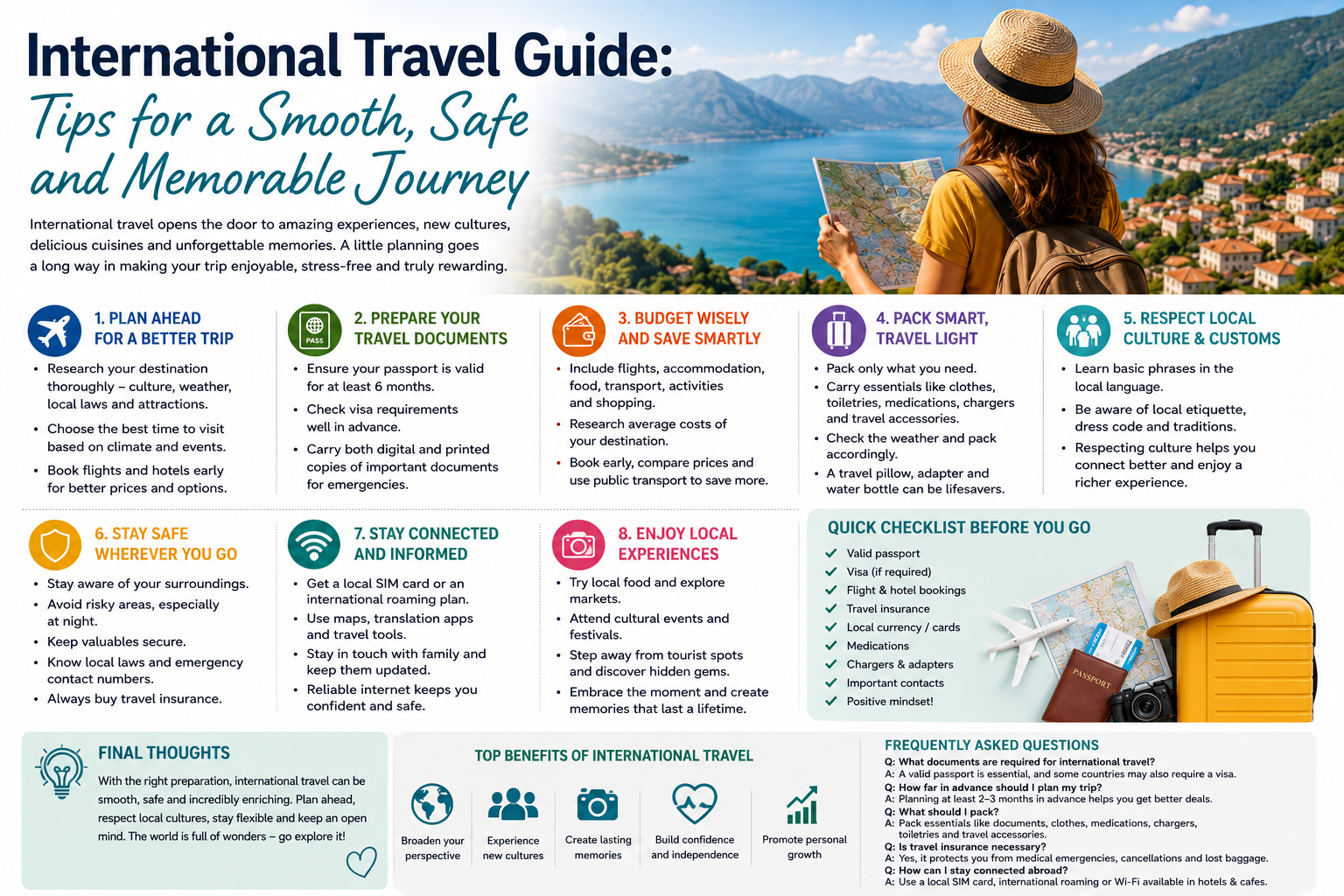
Traveling to another country is one of life’s most rewarding experiences. It offers the opportunity to explore different cultures, taste authentic local cuisine, admire world-famous landmarks, and create memories that last a lifetime. Whether you’re planning your very first overseas vacation or you’re an experienced traveler, careful preparation can make your journey smoother, safer, and far more enjoyable.
A well-planned international trip isn’t just about booking flights and hotels. It also involves understanding entry requirements, creating a realistic budget, packing wisely, learning about local customs, and preparing for unexpected situations.
This comprehensive guide covers everything you need to know before traveling abroad so you can focus on enjoying your adventure with confidence.
Plan Your International Trip Carefully
Every successful international journey begins with proper planning. Before making any bookings, decide what type of vacation you’re looking for. Some travelers prefer relaxing beach destinations, while others enjoy cultural cities, mountain adventures, or wildlife experiences.
Once you’ve chosen a destination, spend time researching important details such as:
- Weather and climate
- Best season to visit
- Local holidays and festivals
- Entry requirements
- Transportation options
- Safety information
- Popular attractions
- Local customs
Understanding these details helps you avoid unpleasant surprises and allows you to build a realistic travel itinerary.
Booking flights and accommodation several months in advance can often reduce costs while giving you a wider selection of hotels and travel dates.
Prepare Your Travel Documents
Having the correct travel documents is essential for international travel.
Your passport should be valid for at least six months beyond your planned return date, as many countries enforce this requirement.
Depending on your nationality and destination, you may also need:
- Tourist visa
- Electronic travel authorization (ETA)
- Vaccination certificates
- Return flight confirmation
- Hotel reservations
- Travel insurance documents
Always verify entry requirements through official government sources before your departure.
It’s also wise to keep both printed and digital copies of important documents, including your passport, visa, insurance policy, and emergency contact information.
These backups can be extremely helpful if your originals are lost or stolen.
Create a Realistic Travel Budget
Budget planning is one of the most important parts of organizing an international trip.
Many travelers underestimate daily expenses, leading to unnecessary financial stress during their vacation.
Your travel budget should include:
- Flights
- Accommodation
- Meals
- Local transportation
- Attraction tickets
- Shopping
- Internet access
- Travel insurance
- Emergency expenses
Researching average prices at your destination allows you to estimate costs more accurately.
Money-saving strategies include:
- Booking flights early
- Comparing hotel prices
- Using public transportation
- Eating at local restaurants
- Purchasing city attraction passes
- Traveling during shoulder seasons
A realistic budget helps you enjoy your vacation without constantly worrying about spending.
Pack Smart, Not Heavy
Packing efficiently makes international travel significantly easier.
Rather than filling your suitcase with unnecessary items, focus on versatile clothing and travel essentials.
Some must-pack items include:
- Passport and travel documents
- Comfortable clothing
- Walking shoes
- Personal medications
- Toiletries
- Universal power adapter
- Phone charger
- Power bank
- Reusable water bottle
- Travel pillow
Before packing, check the weather forecast for your destination so you can choose suitable clothing.
Packing cubes and compression bags can help organize your luggage while maximizing available space.
Remember that carrying lighter luggage makes airport transfers, train journeys, and hotel check-ins much more convenient.
Understand Local Culture and Etiquette
Learning about local customs before you travel demonstrates respect for your destination and often leads to more meaningful interactions with local people.
Simple gestures such as greeting people politely or learning a few common phrases in the local language can create positive first impressions.
Before arriving, familiarize yourself with:
- Greeting customs
- Dining etiquette
- Dress codes
- Tipping practices
- Religious traditions
- Photography rules
- Public behavior
Being culturally aware not only prevents misunderstandings but also helps you enjoy a richer and more authentic travel experience.
Stay Safe While Traveling Abroad
Safety should always remain a top priority during international travel.
Although most destinations are welcoming and safe for tourists, taking basic precautions greatly reduces potential risks.
Some practical safety tips include:
- Keep valuables secure.
- Avoid displaying expensive jewelry.
- Stay aware of your surroundings.
- Use licensed transportation services.
- Avoid isolated areas late at night.
- Share your itinerary with family.
- Save local emergency numbers.
- Carry emergency cash separately.
Travel insurance is strongly recommended because it can provide financial protection for medical emergencies, trip cancellations, delayed flights, or lost baggage.
Even if you never need to use it, having coverage offers valuable peace of mind.
Stay Connected While Traveling Abroad
Staying connected during an international trip is easier than ever thanks to modern technology. Reliable internet access helps you navigate unfamiliar cities, communicate with family and friends, access booking confirmations, and respond quickly if your plans change.
Before you leave, consider the most suitable connectivity option for your destination.
Use a Local SIM Card or eSIM
Buying a local SIM card is often the most affordable option for travelers staying several days or weeks. Many airports and mobile phone stores offer prepaid plans with generous data allowances.
If your phone supports eSIM technology, you can purchase a digital data plan before departure and activate it as soon as you arrive, avoiding the need to swap physical SIM cards.
Check International Roaming Charges
If you prefer to use your existing phone number, contact your mobile provider to learn about international roaming packages. While roaming can be convenient, it may be more expensive than using a local SIM or eSIM, especially for long trips.
Download Useful Travel Apps
A few essential apps can make your journey much easier. Consider downloading:
- Offline maps
- Language translation apps
- Currency converters
- Public transportation apps
- Airline apps
- Hotel booking confirmations
- Weather forecasts
- Emergency contact information
Having these resources available offline can be especially helpful when internet access is limited.
Getting Around in a Foreign Country
Every destination has its own transportation system, so it’s worth researching your options before you arrive.
Depending on the country, you may travel by:
- Metro or subway
- Buses
- Trains
- Ride-sharing services
- Taxis
- Rental cars
- Ferries
- Domestic flights
Public transportation is often the most affordable and convenient way to explore large cities. Many destinations also offer travel passes that provide unlimited rides for a fixed period, helping you save money.
If you plan to rent a car, check whether an International Driving Permit (IDP) is required and familiarize yourself with local traffic rules before driving.
Managing Money While Traveling
Handling your finances wisely can help prevent unnecessary stress during your trip.
Before departure:
- Inform your bank about your travel dates.
- Carry at least two payment methods.
- Keep a small amount of local currency for immediate expenses.
- Use credit or debit cards that charge low foreign transaction fees.
Avoid carrying large amounts of cash, and store emergency funds separately from your wallet.
When using ATMs abroad, withdraw money from reputable bank-operated machines whenever possible. This reduces the risk of card fraud and often provides better exchange rates than airport currency exchange counters.
Experience Local Culture Beyond Tourist Attractions
One of the greatest rewards of international travel is discovering the authentic character of a destination.
While famous landmarks deserve a place on your itinerary, don’t overlook the everyday experiences that make each country unique.
Consider spending time:
- Browsing local markets
- Visiting neighborhood cafés
- Trying traditional dishes
- Attending cultural festivals
- Exploring residential neighborhoods
- Shopping at local artisan stores
- Visiting public parks
- Joining guided walking tours
These experiences often create more meaningful memories than simply checking famous attractions off a list.
Common International Travel Mistakes to Avoid
Even experienced travelers occasionally make avoidable mistakes. Being aware of them can help your trip run more smoothly.
Overpacking
Many travelers bring far more clothing and accessories than they actually need. Packing lighter makes airports, train stations, and hotel transfers much easier.
Ignoring Visa Requirements
Always verify visa and entry requirements well before departure. Last-minute surprises can disrupt even carefully planned trips.
Exchanging All Your Money at the Airport
Airport exchange counters often offer less favorable rates. Whenever possible, exchange only a small amount for immediate expenses and use local bank ATMs after arrival.
Planning Every Minute
A packed schedule may leave little room for spontaneous discoveries. Allow free time to explore at your own pace and enjoy unexpected opportunities.
Skipping Travel Insurance
Unexpected situations such as medical emergencies, flight cancellations, or lost luggage can become very expensive. Travel insurance provides valuable financial protection and peace of mind.
Responsible International Travel
Responsible tourism benefits both travelers and local communities.
Simple choices can help reduce your environmental impact while supporting the places you visit.
Responsible travel practices include:
- Respect local customs and traditions.
- Support locally owned businesses.
- Reduce single-use plastic waste.
- Follow wildlife protection guidelines.
- Stay on marked hiking trails.
- Conserve water and energy.
- Dispose of waste responsibly.
- Purchase locally made products instead of imported souvenirs.
Traveling responsibly helps preserve destinations for future generations while creating more meaningful experiences.
Frequently Asked Questions
How far in advance should I plan an international trip?
Planning at least two to three months ahead generally provides better flight prices, accommodation choices, and enough time to arrange passports, visas, travel insurance, and other necessary documents.
What documents are required for international travel?
Requirements vary by destination, but most travelers need a valid passport. Some countries also require visas, electronic travel authorizations, vaccination certificates, proof of accommodation, return flight tickets, or evidence of sufficient funds.
What should I pack for an international vacation?
Pack comfortable clothing suitable for the climate, travel documents, medications, toiletries, electronics, chargers, a universal power adapter, comfortable shoes, and a small first-aid kit. Always leave extra space in your luggage for souvenirs.
Is travel insurance worth buying?
Yes. Travel insurance can protect you against unexpected medical expenses, trip cancellations, delayed flights, lost baggage, and other travel disruptions that could otherwise become costly.
What’s the best way to stay connected abroad?
Local SIM cards and eSIM plans usually provide the best value for international travelers. They offer affordable mobile data while allowing easy access to navigation, translation apps, and online bookings.
Final Thoughts
International travel offers far more than the chance to visit famous landmarks. It provides opportunities to experience different cultures, meet new people, taste regional cuisine, and gain a broader understanding of the world.
A successful trip begins with thoughtful planning. Preparing your documents, creating a realistic budget, packing efficiently, learning about local customs, and staying flexible can help you avoid common travel challenges and enjoy every stage of your journey.
Remember that travel isn’t about seeing the greatest number of places—it’s about experiencing each destination in a meaningful way. Taking time to explore beyond the typical tourist attractions, supporting local communities, and respecting cultural traditions often leads to the most memorable experiences.
Whether you’re planning your first overseas adventure or adding another destination to your travel list, good preparation will help you travel with confidence, stay safe, and make the most of every opportunity along the way.
The world is full of incredible destinations waiting to be explored. With the right planning and an open mind, your next international journey can become an unforgettable experience that inspires many more adventures in the future.